
How to Layer Textures Like a Designer in 5 Minutes: Transform Any Room with Botanical Elegance
The secret to creating spaces that feel effortlessly sophisticated lies not in expensive furniture or dramatic renovations, but in the art of texture layering. When you master this fundamental design principle and infuse it with botanical elegance, you can transform any room from ordinary to extraordinary in just minutes.
Professional designers understand that texture is what gives a room its personality and depth. It's the difference between a space that feels flat and one-dimensional, and one that invites you to linger, touch, and truly experience your surroundings. By incorporating natural, botanical elements into your texture layering strategy, you create an environment that feels both luxurious and grounded in nature's timeless beauty.
Understanding the Foundation of Texture Layering
Texture layering works on the principle of contrast and balance. Every successful room combines different tactile experiences to create visual and physical interest. Think of it as creating a conversation between materials – smooth marble speaks to rough jute, polished metal responds to weathered wood, and crisp linen answers soft velvet.
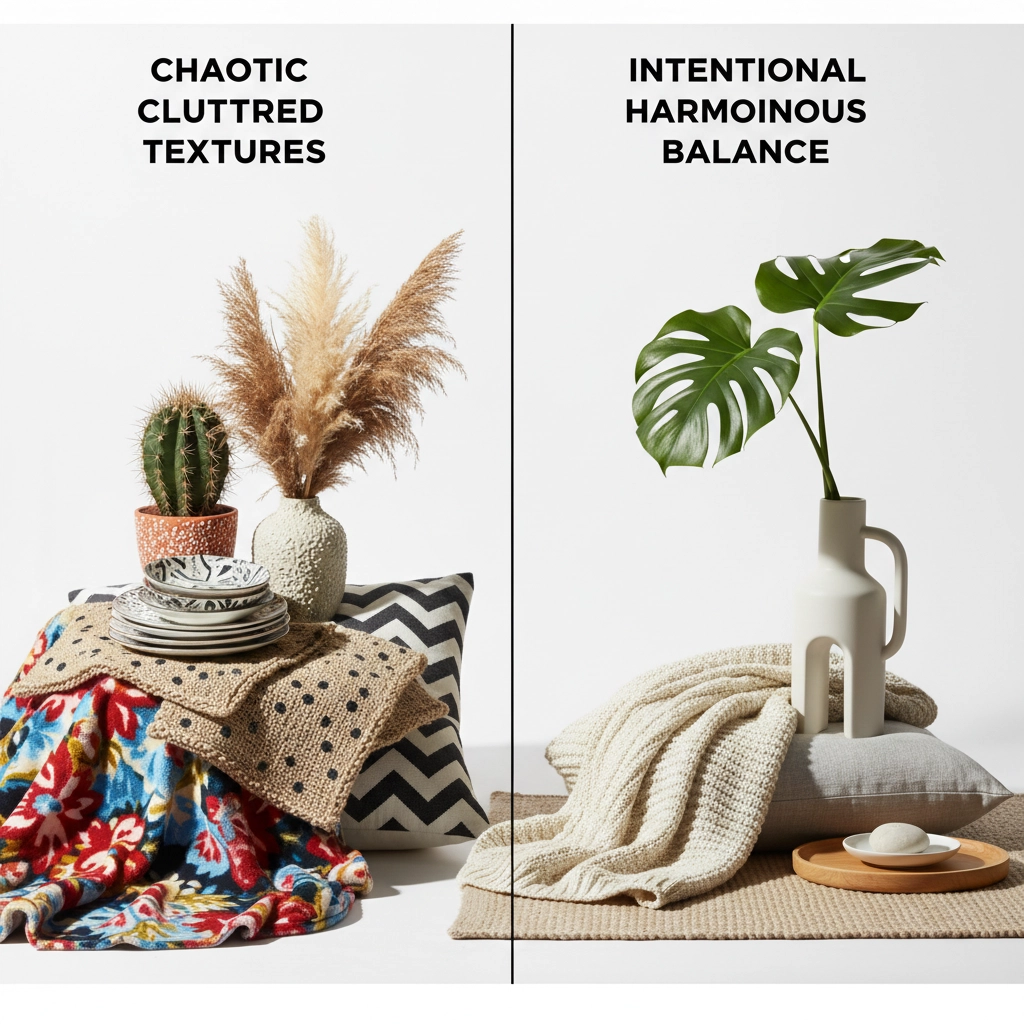
The key is intentionality. Random placement of textured items creates chaos, but thoughtful layering creates harmony. When you add botanical elements to this equation, you introduce nature's own perfect balance of textures – the smooth surface of a ceramic planter against the organic irregularity of tree bark, or the delicate fronds of a fern contrasting with the structured weave of a natural fiber rug.
The Five-Minute Botanical Texture Transformation
Minute One: Establish Your Base Layer
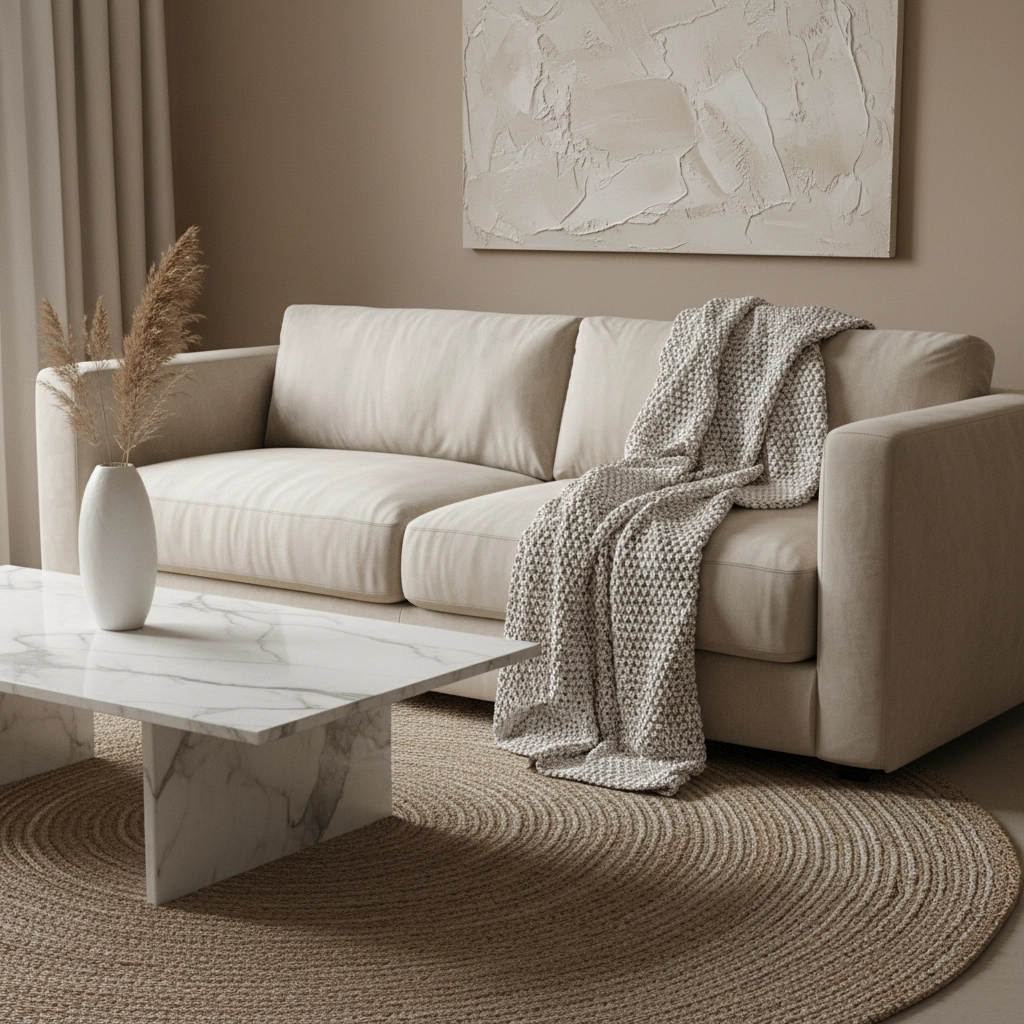
Start with your largest textile element – typically your sofa, area rug, or bedding. This becomes your foundation texture. For botanical elegance, consider natural fiber rugs like jute, sisal, or seagrass. These materials instantly ground your space with earthy sophistication while providing the perfect neutral backdrop for additional layers.
If you're working with existing pieces, identify the dominant texture already present in your room. Is it the smooth leather of your sofa, the nubby weave of your current rug, or the polished surface of your coffee table? This becomes your starting point for contrast.
Minute Two: Add Contrasting Hard Elements
Balance is crucial in texture layering. If your base is soft, introduce hard surfaces. If it's smooth, add something with pronounced texture. For botanical elegance, this is where natural stone, ceramic, or glass elements shine.
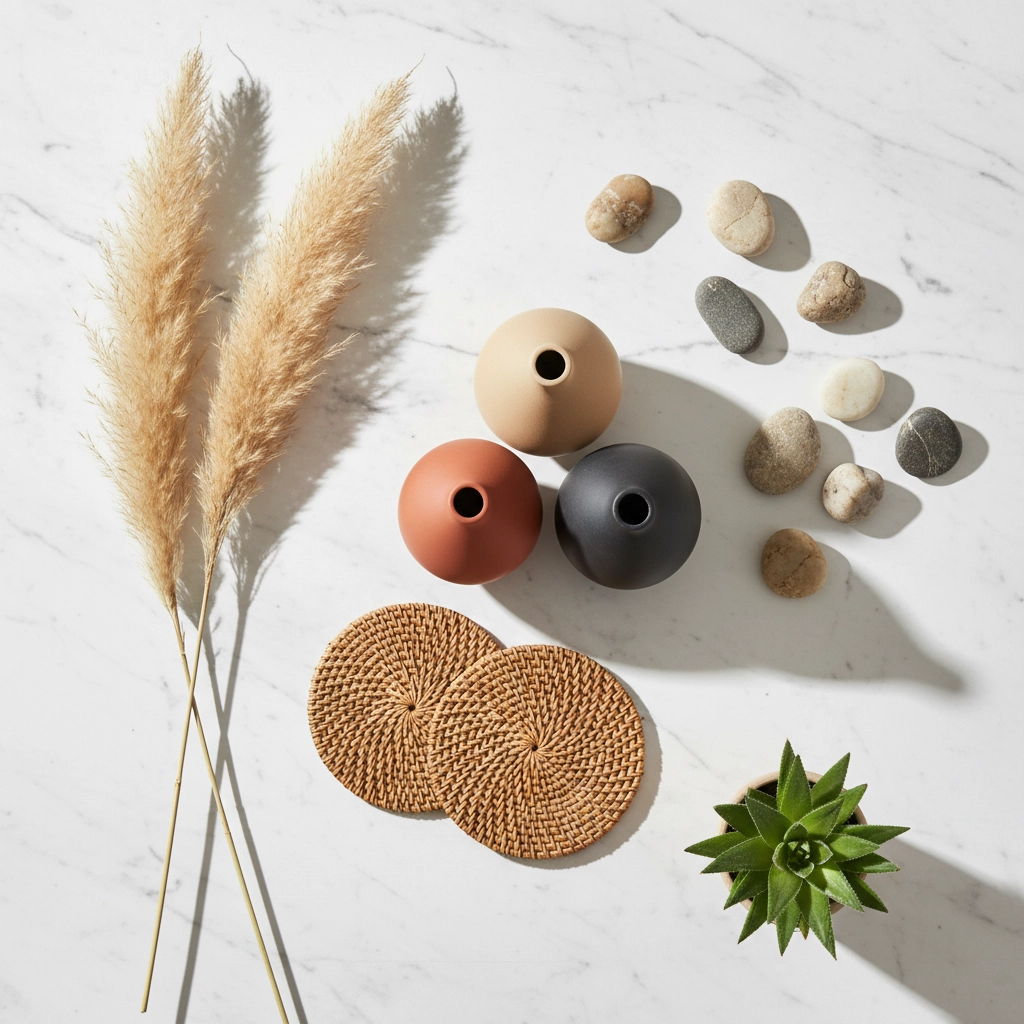
Place a ceramic vase with an interesting glaze on your coffee table, introduce a stone sculpture, or add a glass terrarium. These elements provide the necessary contrast while maintaining the natural, organic feel you're cultivating. The interplay between soft textiles and hard natural materials creates instant sophistication.
Minute Three: Layer in Woven and Natural Textures
This is where botanical elegance truly comes alive. Introduce woven baskets, rattan accents, or bamboo elements. A woven basket can hold magazines, store throws, or display plants – serving both functional and aesthetic purposes.
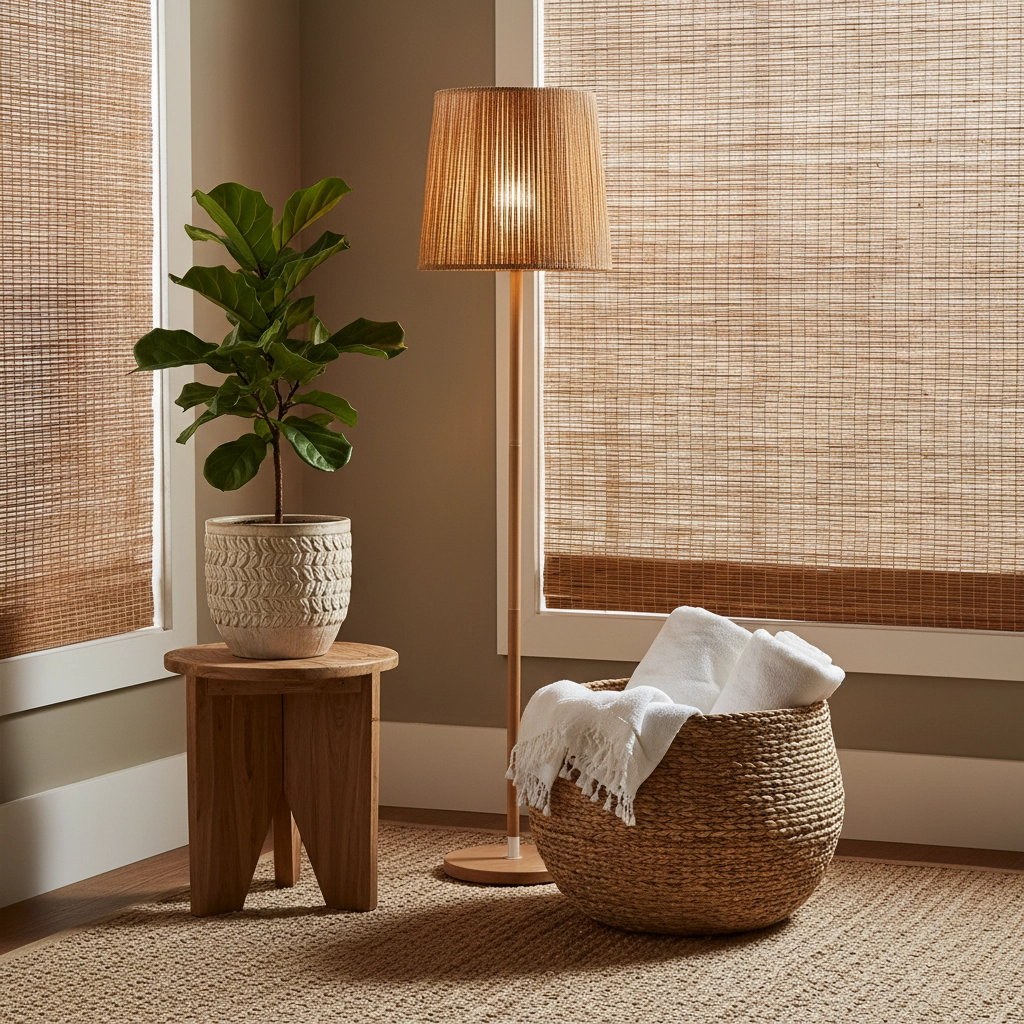
Consider a rattan lamp shade to filter light beautifully while adding texture to your lighting scheme. Bamboo blinds or woven wood shades provide privacy while introducing another layer of natural texture. These elements work together to create depth and visual interest while maintaining the organic, botanical theme.
Minute Four: Incorporate Living Textures
Nothing says botanical elegance like actual plants, but it's not just about the greenery – it's about the textures they bring. The glossy leaves of a rubber plant provide smooth contrast, while the delicate fronds of a Boston fern add soft, feathery texture. Succulents offer structured, geometric patterns, and trailing plants like pothos introduce movement and flowing lines.
Consider the containers as well. Terra cotta pots add earthy, matte texture, while glazed ceramic planters provide smooth, reflective surfaces. Woven plant baskets or macramé hangers introduce additional textile elements that tie into your overall layering scheme.
Minute Five: Perfect the Balance
Step back and assess your layering. The goal is harmony, not competition. You should see a pleasing mix of textures that complement rather than fight each other. If something feels overwhelming, remove it. If an area feels flat, add one small textural element.
Look for opportunities to tie your textures together. A throw pillow that picks up the weave pattern of your basket, or a ceramic vase that echoes the color of your natural fiber rug. These subtle connections create cohesion in your layered scheme.
The Science Behind Successful Texture Combinations
Understanding why certain textures work well together helps you make confident choices. Complementary textures share either similar colors or contrasting tactile qualities. For botanical elegance, this means pairing:
Smooth surfaces like polished stone or glazed ceramic with rough textures like jute or raw wood. The contrast creates visual tension that keeps the eye engaged. Cool, hard surfaces like marble or glass with warm, soft textures like wool or cotton. This temperature contrast adds comfort and livability to your space.
Linear textures like wood grain or woven patterns with organic, irregular textures like natural sponges or coral-inspired ceramics. This geometric versus organic contrast is fundamental to botanical design.
Common Texture Layering Mistakes to Avoid
Many people fall into the trap of using too many similar textures, which creates monotony rather than interest. Avoid combining multiple nubby textures or several smooth surfaces without contrast. Similarly, don't let one texture dominate completely – balance is key.
Another common mistake is ignoring scale. Large-scale textures need to be balanced with smaller, more detailed ones. A chunky knit throw pairs beautifully with fine linen pillows, while a large jute rug can handle bold, textured furniture pieces.
Seasonal Texture Transitions
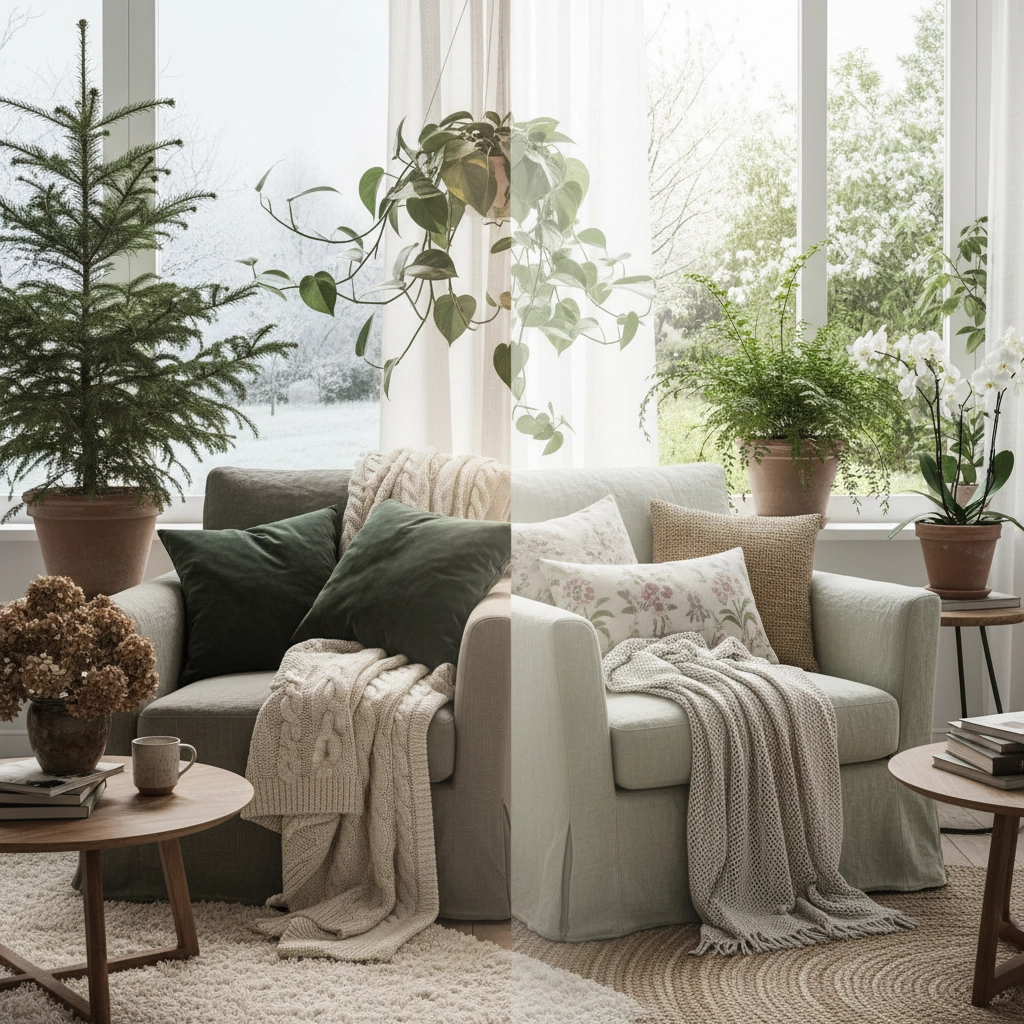
One of the beauties of texture layering is how easily you can transition your space through seasons while maintaining botanical elegance. In spring and summer, emphasize lighter, airier textures – linen throws, cotton cushions, and delicate plant textures like ferns and grasses.
As autumn approaches, introduce warmer, cozier textures while maintaining your botanical foundation. Add wool throws, velvet pillows, and plants with more substantial textures like fiddle leaf figs or monstera. Winter calls for the richest textures – cashmere throws, fur pillows, and evergreen plants that provide year-round botanical presence.
Maintenance and Evolution
Successful texture layering isn't static. As your plants grow and change, as textiles age and develop patina, your layered scheme naturally evolves. Embrace this evolution – it's part of what makes botanical elegance so appealing.
Regular maintenance keeps your textures looking their best. Natural fiber rugs benefit from regular vacuuming and occasional professional cleaning. Woven baskets can be refreshed with a damp cloth, and ceramic pieces need only occasional dusting to maintain their luster.
Creating Focal Points Through Texture
Use texture layering strategically to create focal points in your room. A textural vignette on a side table – perhaps combining a smooth ceramic vase, a rough-hewn wooden bowl, and the soft texture of a small plant – draws the eye and creates interest.
Similarly, layering textures on your sofa through pillows and throws creates a inviting focal point that encourages relaxation and connection with your space.
The beauty of mastering texture layering with botanical elegance lies in its accessibility. You don't need expensive pieces or major renovations to create sophisticated, designer-quality spaces. With these five-minute techniques, you can transform any room into a textural haven that celebrates both luxury and nature's inherent beauty.
Remember, the goal isn't perfection – it's creating a space that feels authentic, comfortable, and visually engaging. Trust your instincts, embrace the natural imperfections that make botanical elements so appealing, and enjoy the process of creating a home that truly reflects your sophisticated yet grounded aesthetic sensibility.