
How to Master Art Deco Revival Without Looking Overdone: 5 Statement Pieces You Need in 2025
Art Deco is making a triumphant return in 2025, but this time it's all about sophisticated restraint rather than maximalist excess. The key to nailing this trend lies in understanding that modern Art Deco revival isn't about recreating a 1920s speakeasy in your living room: it's about capturing the elegance, glamour, and geometric beauty of the era while keeping things fresh and liveable for today's lifestyle.
The challenge many homeowners face is striking that perfect balance between statement-making drama and timeless sophistication. Too little, and you miss the essence of Art Deco's bold spirit. Too much, and your space can quickly veer into costume-party territory. The secret is in curating carefully chosen pieces that make an impact without overwhelming your existing décor.
The Art of Restraint: Why Less Is More
The biggest mistake people make when embracing Art Deco revival is thinking they need to transform every surface with geometric patterns, metallic finishes, and rich jewel tones. The truth is, authentic Art Deco elegance comes from thoughtful placement of a few spectacular pieces rather than wall-to-wall vintage styling.
Start by establishing neutral foundations. Keep your walls in soft, sophisticated tones: think warm whites, soft grays, or muted beiges. This creates a clean backdrop that allows your Art Deco elements to shine without competing for attention. The same principle applies to larger furniture pieces; let your sofa, dining table, or bed frame remain understated so your statement pieces can truly make their mark.
Texture layering is equally crucial for avoiding an overdone look. The beauty of Art Deco lies in the interplay between luxurious materials: velvet, lacquered wood, polished chrome, and crystal: but these should be balanced with contemporary elements. Mix in natural textures like linen, raw wood, or stone to ground the glamour and prevent your space from feeling like a museum exhibit.
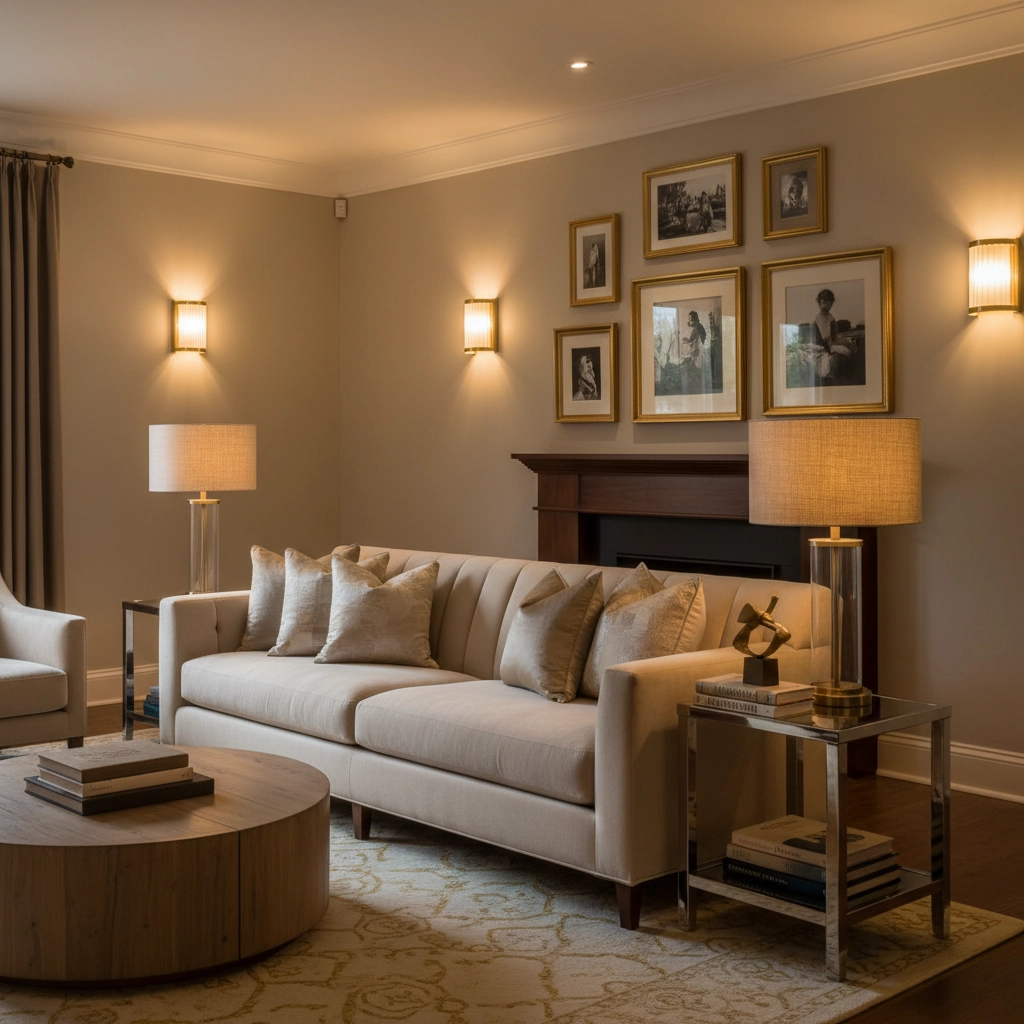
Lighting plays a pivotal role in achieving the right mood. Art Deco's signature drama comes alive under warm, directional lighting that makes metallics glow and adds depth to rich colors. Avoid harsh overhead lighting that can make bold elements feel overwhelming. Instead, create layers of ambient and accent lighting that enhance the luxurious feel while maintaining intimacy.
Five Essential Statement Pieces for 2025
1. Sculptural Lighting Fixtures
Nothing says Art Deco quite like a show-stopping light fixture. Whether it's a geometric chandelier, a sleek floor lamp with brass accents, or wall sconces with etched glass panels, lighting is your most powerful tool for introducing the aesthetic. The beauty of choosing lighting as your primary Art Deco element is that it serves dual purposes: functional illumination and artistic statement.
Look for pieces that feature classic Art Deco motifs: sunburst patterns, stepped geometric forms, or cascading crystal elements. A single dramatic chandelier can transform an entire dining room, while a pair of matching table lamps can add Art Deco flair to a living room without overwhelming the space. The key is choosing pieces with clean lines and quality materials that will stand the test of time.
2. Geometric Mirrors
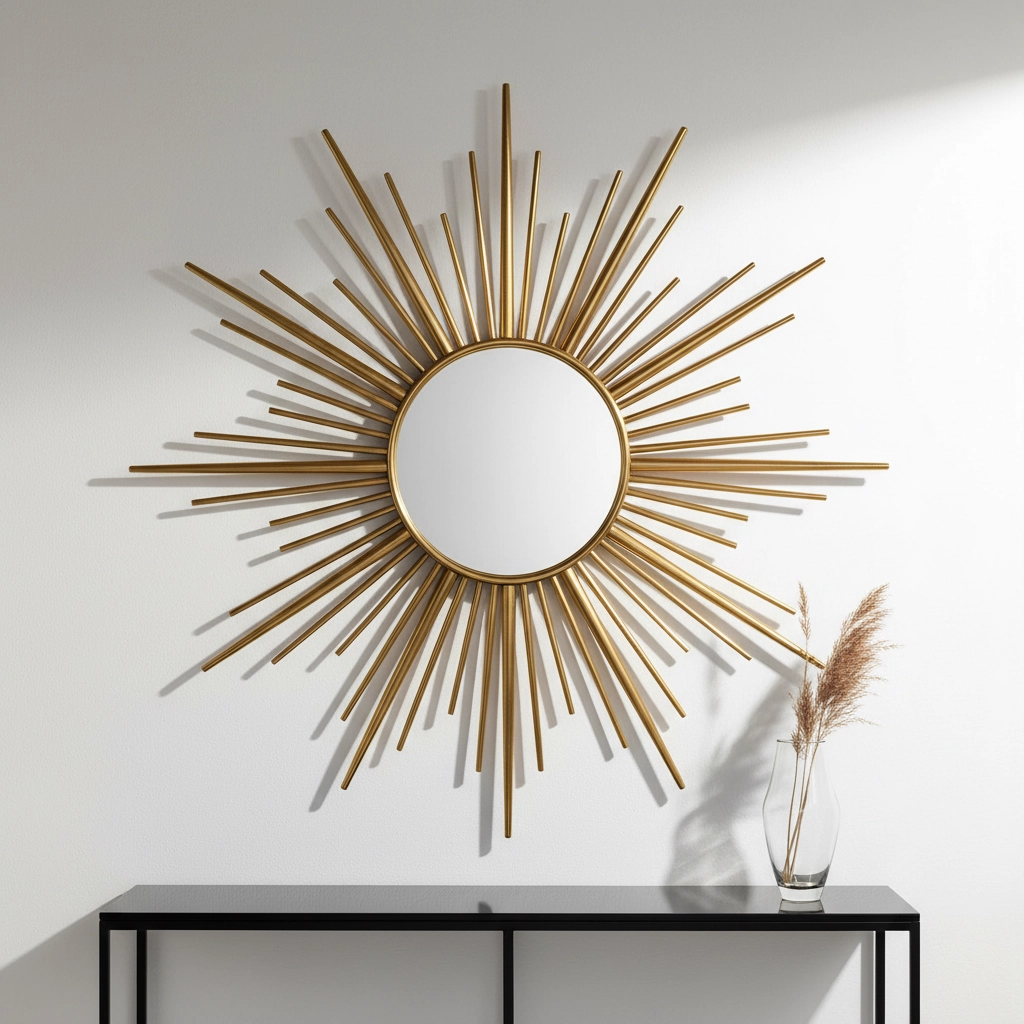
Mirrors were essential elements in Art Deco interiors, serving both practical and aesthetic purposes. They amplify light, create the illusion of space, and provide opportunities for stunning geometric design. Today's Art Deco revival mirrors come in various forms: from large statement pieces with elaborate metallic frames to smaller accent mirrors arranged in clusters.
Consider a sunburst mirror as a focal point above a fireplace or console table, or opt for a large rectangular mirror with stepped corners and brass detailing. These pieces work beautifully in entryways, bedrooms, or dining rooms, adding both glamour and functionality. The reflective surfaces also help bounce light around the room, enhancing that luminous quality that Art Deco interiors are known for.
3. Statement Seating with Bold Upholstery
Furniture from the Art Deco era was characterized by clean lines, luxurious materials, and bold proportions. While you don't need to furnish your entire room with period pieces, one or two carefully chosen seating elements can make a tremendous impact.
Look for chairs or ottomans upholstered in rich velvet, leather, or textured fabrics in jewel tones: emerald green, sapphire blue, or deep burgundy. The furniture itself should feature geometric forms, curved lines, or chrome accents that reference the era's design language. A single Art Deco-inspired armchair can serve as a stunning focal point in a bedroom or living room corner.
4. Decorative Objects and Sculptures
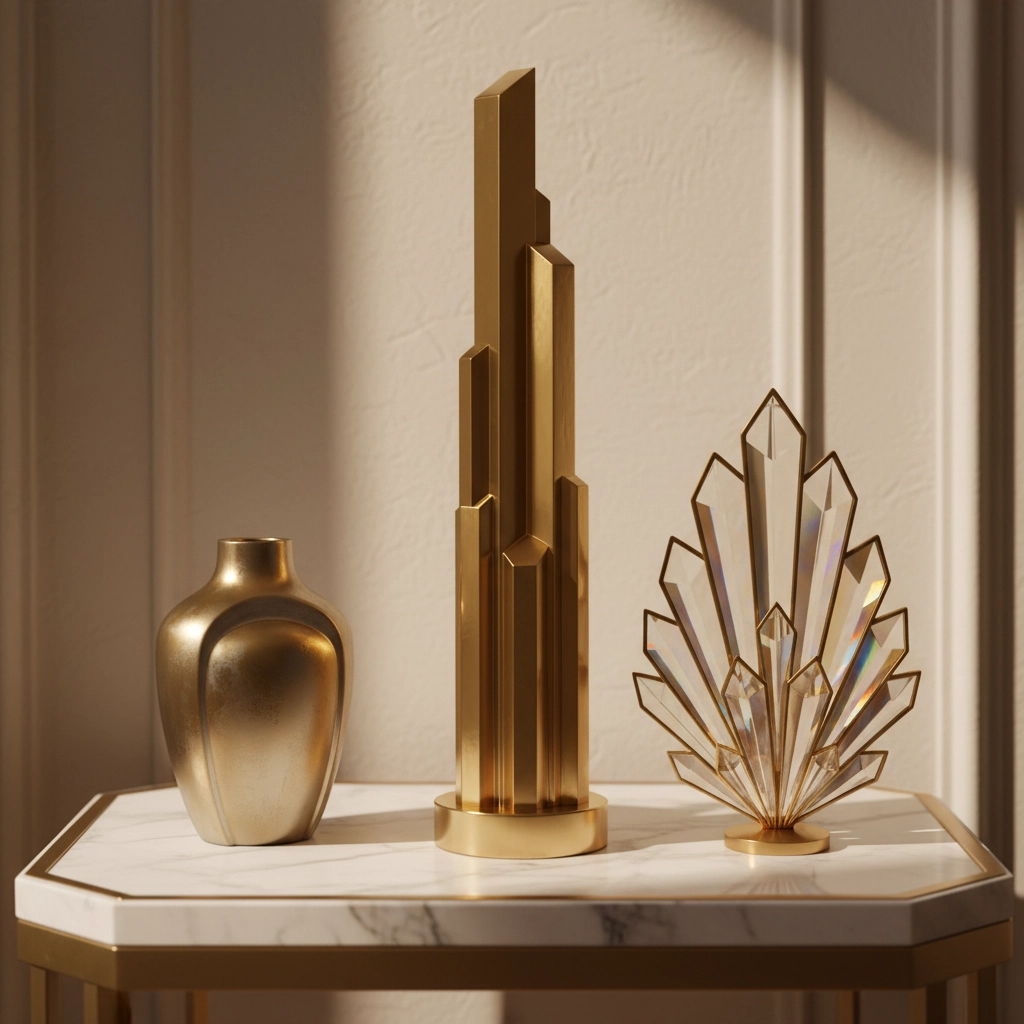
Art Deco was an era that celebrated craftsmanship and artistic expression through decorative objects. Today's revival embraces this spirit through carefully chosen ornaments, vases, and sculptures that capture the period's aesthetic without cluttering your space.
Consider pieces with metallic finishes, geometric forms, or stylized natural motifs. A pair of brass ornaments with crystal accents can add instant sophistication to a mantelpiece or side table. Abstract sculptural pieces work beautifully as standalone statements, while geometric vases can hold fresh flowers or stand empty as sculptural elements.
The key is restraint: choose a few high-quality pieces rather than filling every surface. Group objects in odd numbers and vary heights for visual interest, but always maintain breathing room between pieces.
5. Patterned Textiles and Wallcoverings
Pattern is where Art Deco really comes alive, but it's also where you can easily go overboard. The trick is choosing one or two areas where bold patterns can make a statement while keeping the rest of your textiles relatively neutral.
Consider a single accent wall with Art Deco-inspired wallpaper featuring geometric or stylized floral motifs. If wallpaper feels too permanent, introduce pattern through textiles: throw pillows, curtains, or area rugs with classic Art Deco designs. Look for patterns that incorporate metallic threads or have a subtle sheen to catch the light.
When working with patterned textiles, stick to a cohesive color palette that includes one or two bold accent colors paired with neutrals. This approach allows you to layer different patterns without creating visual chaos.
Making It Work in Modern Spaces
The beauty of 2025's Art Deco revival is its adaptability to contemporary living. You don't need a pre-war apartment or mansion to embrace this trend: Art Deco elements work beautifully in modern homes, apartments, and even minimalist spaces.
The key is integration rather than transformation. Start with one or two of the statement pieces mentioned above and build gradually. Pay attention to how each addition affects the overall balance of your room. If something feels too bold or overwhelming, it probably is.
Color coordination is crucial for success. Art Deco's signature palette includes rich jewel tones, metallics, and dramatic contrasts, but you don't need to use them all. Choose one or two accent colors that work with your existing décor and stick to that palette throughout your Art Deco elements.
Remember that authentic Art Deco was about luxury and craftsmanship, so invest in quality pieces that will last. A single well-made Art Deco-inspired lamp or mirror will have more impact than multiple inexpensive imitations.
The goal is to create a space that feels both glamorous and liveable, sophisticated yet comfortable. When done right, Art Deco revival adds a layer of elegance and personality to any interior without overwhelming the space or your daily life. It's about bringing that timeless sense of luxury into the modern world( one carefully chosen statement piece at a time.)